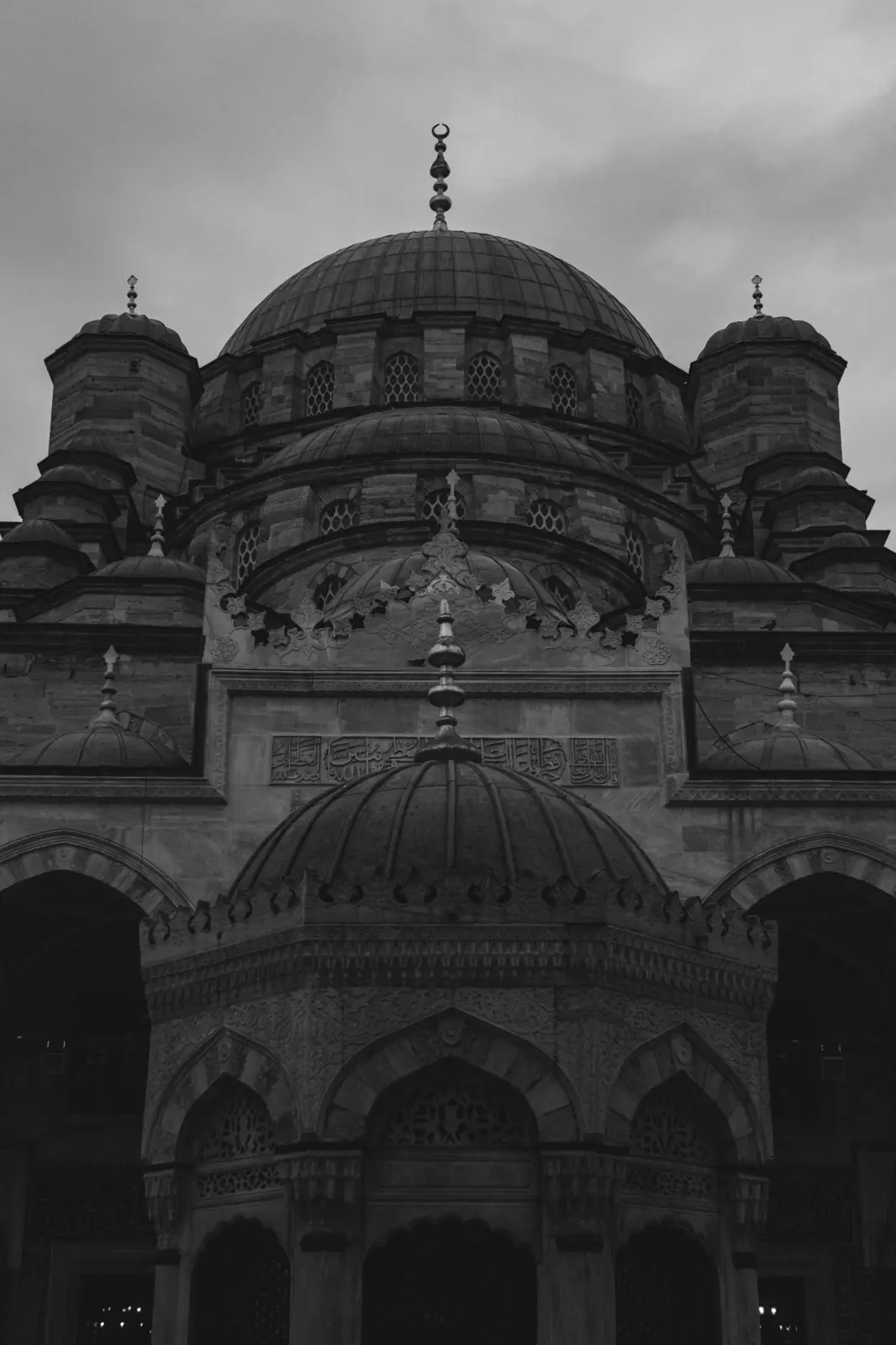
Author of one of the earliest known commentaries on the Īsāghūjī: a short ‘he said – I say’ commentary that became a standard companion to the text in Ottoman madrasas and the base for many glosses.
Life
Almost nothing is known about al-Kātī’s life. The reference works give his name, Ḥusām al-Dīn al-Ḥasan al-Kātī, and his death in 760/1358–9, but say nothing certain about where he was born, where he studied or where he taught. He is remembered almost entirely through one book: his (sharḥ) on al-Abharī’s .
The opens with the words al-ḥamdu li-llāhi al-wājibi wujūduhu (‘praise be to God, whose existence is necessary’). The bibliographer Ḥājjī Khalīfa (Kâtip Çelebi, d. 1067/1657) describes it as a short commentary written ‘bi-l-qawl’: a passage of al-Abharī’s text is quoted after the word qāla (‘he said’), and al-Kātī’s explanation follows after aqūlu (‘I say’). Its modern editor notes that it is known for this reason simply as Qāla aqūlu. Copies often mark the two words in red.
Turkish scholars of Islamic (Adem Evmeş, Alaattin Tekin) call al-Kātī the first known commentator on the ; the editor of the modern edition, more cautiously, counts his work ‘among the first’ and praises its clear, concise style. A comparison of the first half of his commentary with al-Fanārī’s shows that al-Kātī keeps close to al-Abharī’s text: he does not open with a of logic or its , as al-Fanārī does, and he divides single expressions (mufrad) into four kinds where al-Fanārī has five.
Uncertain or disputed
- Only the year of his death (760) is given; birthplace, teachers and career are not documented in the reference works consulted. A bookseller’s description calls him a native of Anatolia, sometimes called al-Rūmī, but no reference work consulted confirms this.
- Whether his commentary is the very first on the Īsāghūjī is an inference from the surviving record, not a certainty.
- The Islamisation of Anatolia database also lists a few manuscripts of other works under his name (on the rules of disputation, a commentary on Miftāḥ al-ʿulūm, a commentary on al-Farāʾiḍ al-Sirājiyya); these attributions come from library catalogues and have not been checked.
Works
- Sharḥ Īsāghūjī شَرْحُ إِيسَاغُوجِي — on ĪsāghūjīA short commentary in qāla/aqūlu form, also known as Qāla aqūlu. The Islamisation of Anatolia database lists about 140 manuscript copies, most in Turkish libraries. According to its modern editor it had earlier been printed only in Indian lithographs. Modern edition: Sharḥ matn al-Īsāghūjī fī l-manṭiq, ed. Qāsim b. Naʿīm al-Ḥanafī (Beirut: Dār al-Kutub al-ʿIlmiyya, 2015), the edition used on The Mantiqi.commentary
Reception
The continued to be the accompanying text through which the was studied throughout the Ottoman period; the Ottoman scholar and biographer Taşköprüzāde mentions in his autobiography that he studied the Īsāghūjī with al-Kātī’s commentary (Islamisation of Anatolia database).
Ḥājjī Khalīfa lists glosses (ḥawāshī) on it by al-Bardaʿī, Muḥyī al-Dīn al-Tālishī, al-Shirwānī, Mawlānā Qaraja Aḥmad (d. 854), al-Abīwardī and an anonymous who wrote for an Amīr Sulṭān ʿAlī; a gloss on al-Bardaʿī’s gloss by Yaḥyā b. Nuṣūḥ b. Isrāʾīl; and a grammatical analysis (iʿrāb) of al-Kātī’s text, Yanbūʿ al-ḥayāt, by Muḥammad b. ʿAlī al-Malaṭī, written for Khiḍr Beg b. Isfandiyār while he studied with him.
TDV lists a gloss on it by the Ottoman scholar Sürûrī (d. 969/1562). The modern editor names further glosses by ʿAbd al-Ḥakīm al-Siyālkūtī (d. 1067), by ‘Muḥyī al-Dīn’ (al-Tālishī) and the gloss of ‘al-Mawlawī’ printed in the margin of the , and mentions that he wrote a gloss of his own.
Al-Fanārī, writing in the following generations, criticises al-Kātī on at least one point: whether the word ‘’ in the definitions of the five universals is a redundant addition (al-Kātī) or the that the five share (al-Fanārī).
Sources (7)
- Kâtip Çelebi (Ḥājjī Khalīfa), Kashf al-ẓunūn, entry ‘Īsāghūjī’: al-Kātī’s commentary (Arabic Lexicon edition)
- Islamisation of Anatolia database: Kātī, Ḥusām al-Dīn al-Ḥasan (author record)
- al-Kātī, Sharḥ matn al-Īsāghūjī fī l-manṭiq, ed. Qāsim b. Naʿīm al-Ḥanafī (Dār al-Kutub al-ʿIlmiyya, 2015), editor’s introduction pp. 5–7
- Adem Evmeş, ‘Hüsâm Kâtî’nin Şerhu Îsâgûcî Eseri ile Molla Fenârî’nin Fevâidü’l-Fenâriyye Eserinin Tasavvurat Kısmının Karşılaştırılması’, Bozok Üniversitesi İlahiyat Fakültesi Dergisi 17 (2020)
- Alaattin Tekin, review of Ferruh Özpilavcı, Ebherî Îsâgûcî ve Şerhi, Mantık Araştırmaları Dergisi 1 (2019)
- TDV İslâm Ansiklopedisi, ‘ÎSÂGŪCÎ’ (Abdulkuddüs Bingöl)
- Leipzig KOHD manuscript record: al-Kātī, Šarḥ Īsāġūǧī (Hs. or. 6120)