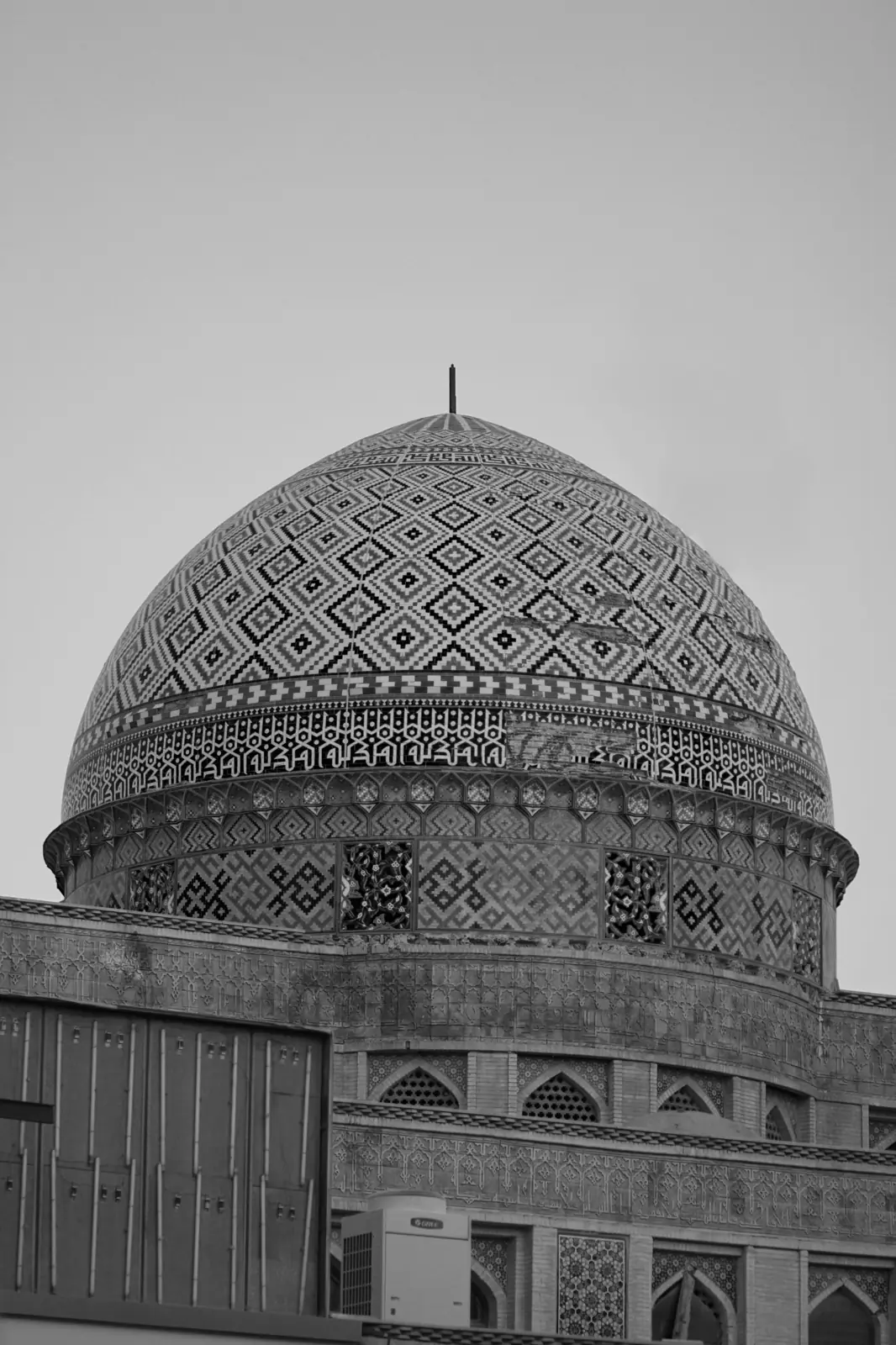
Persian philosopher, Shīʿī theologian and astronomer, founder of the Maragha observatory, who defended Ibn Sīnā’s logic against the innovations of al-Khūnajī, al-Abharī and al-Kātibī.
Life
Al-Ṭūsī was born in Ṭūs on 11 Jumādā I 597 (17 February 1201). After studying with his father he travelled at about fifteen to the centres of learning; in Nishapur he studied law with Muʿīn al-Dīn Sālim b. Badrān al-Miṣrī and philosophy with Farīd al-Dīn Dāmād, with whom he read the works of Ibn Sīnā, above all al-Ishārāt wa-l-tanbīhāt. Tony Street and Nadja Germann add that he read Fakhr al-Dīn al-Rāzī’s commentary on the Ishārāt under al-Abharī. His fame brought an invitation from the Ismāʿīlī governor of Quhistān, Nāṣir al-Dīn Muḥtasham, in whose service he wrote his commentary on the Ishārāt and his Persian ethics, Akhlāq-i Nāṣirī; later he lived, partly as a prisoner, at the Ismāʿīlī stronghold of Alamūt.
When the Mongols besieged Alamūt he advised its lord to surrender to Hülegü, whose favour he then won; he accompanied the campaign against Baghdad. The TDV İslâm Ansiklopedisi notes that the accusation, made by Ibn Taymiyya and Ibn Qayyim al-Jawziyya, that the last caliph was killed on his advice is not found in the detailed sources on the fall of Baghdad. Hülegü funded the observatory at Maragha, completed in 657/1259, where al-Ṭūsī gathered scholars in many fields, among them Quṭb al-Dīn al-Shīrāzī and Najm al-Dīn al-Kātibī. He died in Baghdad on 18 Dhū al-Ḥijja 672 (25 June 1274) and was buried near the shrine of Mūsā al-Kāẓim.
In logic he was, in Street and Germann’s words, ‘a particularly interesting logician’: he came to Ibn Sīnā through al-Rāzī’s students but developed ‘a deeper respect for Avicenna’s formulations than any of his contemporaries’. His commentary on the Ishārāt answers al-Rāzī’s criticisms (he relayed a description of al-Rāzī’s work as ‘a butchery, not a commentary’), while acknowledging its value. In Taʿdīl al-miʿyār he assessed al-Abharī’s Tanzīl al-afkār, which had adopted positions of al-Khūnajī, and he continued the debate in exchanges with al-Kātibī. Against al-Khūnajī’s view that the of logic is conceptions and assents, he held to Ibn Sīnā’s answer: the secondary intelligibles insofar as they lead from the known to the unknown. His Persian Asās al-iqtibās and his Tajrīd al-manṭiq set out Avicennan logic at length.
Street calls al-Abharī, al-Kātibī and al-Ṭūsī ‘certainly among the greatest logicians of the thirteenth century’ and argues that al-Kātibī’s Shamsiyya, though it departs from al-Ṭūsī on many points, arranges its material using the distinction between the form and the matter of arguments that al-Ṭūsī had identified in the order of the Ishārāt. The Shamsiyya so far replaced the logic of the Ishārāt that, Street notes, most manuscripts of the Ishārāt with al-Ṭūsī’s commentary copied after 1400 omit the logic section.
Uncertain or disputed
- His relation to al-Kātibī: the TDV counts al-Kātibī among his students; Street treats them as near-contemporaries both trained by al-Abharī, suggesting that ‘perhaps at some time Ṭūsī had shared a class with Kātibī’.
- The manner of his death: his student Ibn al-Fuwaṭī says in one place that he took his own life, but elsewhere that he died normally; Bar Hebraeus reports a rumour of poisoning. According to the TDV, the other sources do not confirm the story of suicide.
- Whether Hülegü made him vizier is reported only by some sources (TDV).
- His kunya Abū Jaʿfar may come from confusion with the earlier Imāmī scholar Abū Jaʿfar al-Ṭūsī (d. 460/1067) (TDV).
Works
- Ḥall mushkilāt al-Ishārāt (Sharḥ al-Ishārāt) حَلُّ مُشْكِلَاتِ الإِشَارَاتِ — op Ibn SinaCommentary on Ibn Sīnā’s al-Ishārāt wa-l-tanbīhāt, defending it against Fakhr al-Dīn al-Rāzī; written in Quhistān.commentaar
- Asās al-iqtibās أَسَاسُ الاقْتِبَاسِLarge Persian treatise on logic (Tehran 1375 Sh); translated into Arabic by Molla Hüsrev (TDV).werk
- Tajrīd al-manṭiq تَجْرِيدُ المَنْطِقِShort Arabic exposition of logic (Beirut 1408/1988); commentary al-Jawhar al-naḍīd by al-ʿAllāma al-Ḥillī, printed in the late nineteenth century and used in Shīʿī seminaries (SEP).matn
- Taʿdīl al-miʿyār fī naqd Tanzīl al-afkār تَعْدِيلُ المِعْيَارِ فِي نَقْدِ تَنْزِيلِ الأَفْكَارِ — op al-AbharīCritique of al-Abharī’s Tanzīl al-afkār; ed. in Manṭiq wa mabāḥith al-alfāẓ, Tehran 1353 Sh.werk
- Exchanges with al-Kātibī (Muṭāraḥāt)Correspondence on logic and on the proof of the Necessary Existent; the latter ed. Āl Yāsīn as al-Muṭāraḥāt al-falsafiyya (Baghdad 1956).werk
- Tajrīd al-iʿtiqād تَجْرِيدُ الاعْتِقَادِHis main work of philosophical theology, the founding text of Imāmī philosophical kalām (TDV).matn
- Taḥrīr al-Majisṭī and Akhlāq-i NāṣirīRecension of Ptolemy’s Almagest and Persian work on ethics.werk
Reception
The TDV notes that later scholars such as al-Taftāzānī, al-Jurjānī, Mīr Dāmād, Mullā Ṣadrā and Molla Fenârî cite him as a ‘verifier’ (muḥaqqiq), and that Taşköprüzâde regarded him as the first to combine kalām fully with Peripatetic philosophy.
Street and Germann note that Shīʿī seminaries turned to the logic of al-Ṭūsī and al-Ḥillī in the nineteenth century, while Sunni madrasas kept to al-Abharī and al-Kātibī.
Chains of transmission for the Ishārāt still pass through him: the twentieth-century Meccan scholar Yāsīn al-Fādānī recorded one running from al-Jurjānī through Quṭb al-Dīn al-Rāzī and Quṭb al-Dīn al-Shīrāzī to al-Ṭūsī (Fanani and Widigdo).
Sources (5)
- Agil Şirinov and Anar Gafarov, ‘Tûsî, Nasîrüddin’, TDV İslâm Ansiklopedisi (2012)
- Tony Street and Nadja Germann, ‘Arabic and Islamic Philosophy of Language and Logic’, Stanford Encyclopedia of Philosophy (rev. 2013)
- Tony Street, ‘Kātibī (d. 1277), Taḥtānī (d. 1365), and the Shamsiyya’, Oxford Handbook of Islamic Philosophy (2016), preprint on Zenodo
- İbrahim Emiroğlu, ‘Mantık’, TDV İslâm Ansiklopedisi (2003)
- Ahwan Fanani and Mohammad Syifa Amin Widigdo, ‘The Art of Logic in Muslim Scholarship’, Afkar 24/2 (2022)