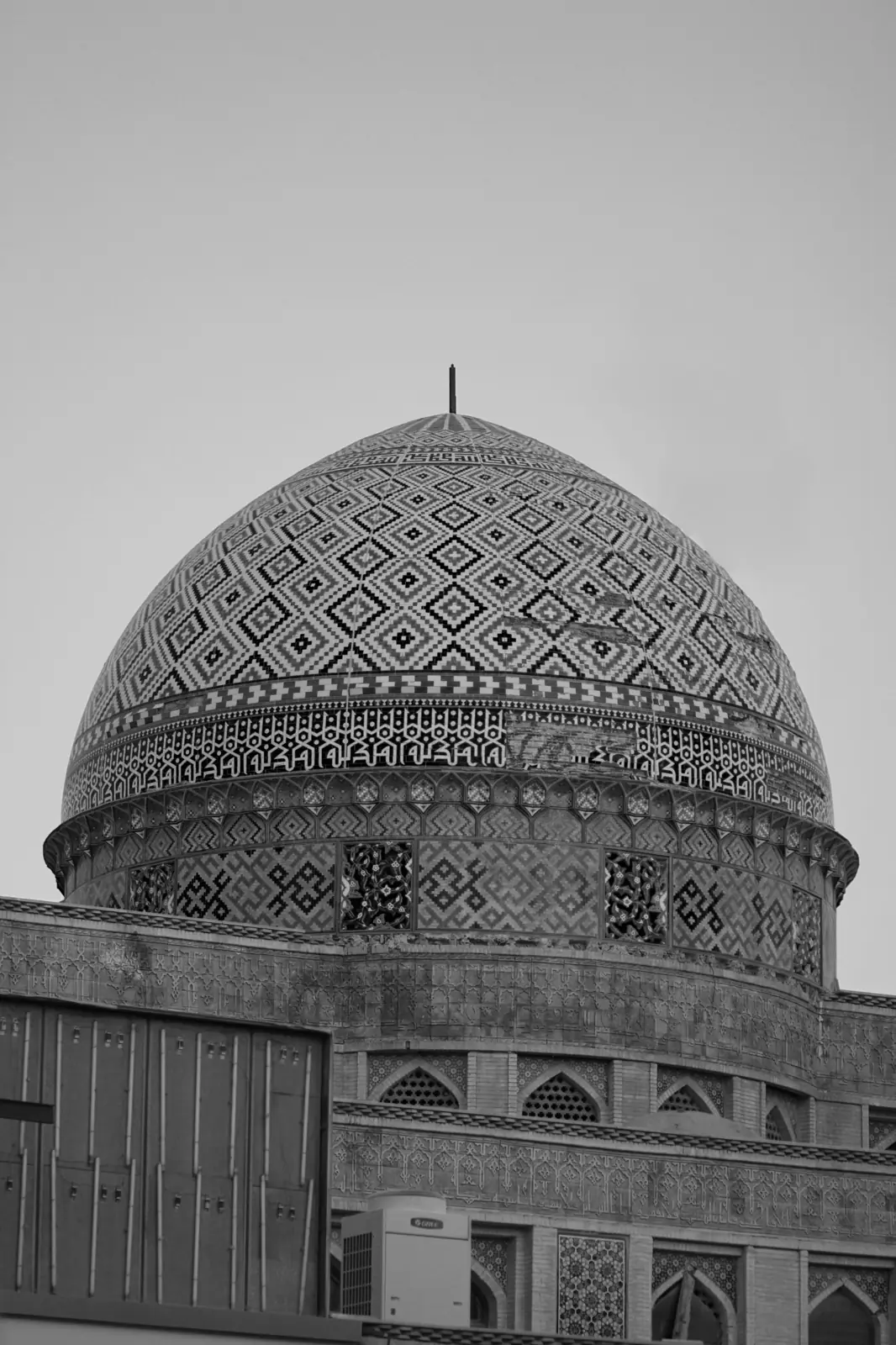
Theologian, grammarian and logician whose gloss on Quṭb al-Dīn al-Rāzī’s commentary on the Shamsiyya became a curriculum book in its own right, and whose Persian primers, the Ṣughrā and the Kubrā, opened the logic course of the Persian-speaking world and India.
Life
Al-Jurjānī was born on 24 Shaʿbān 740 (24 February 1340) at Tāgū near Jurjān, south-east of the Caspian. He was called al-Sayyid al-Sharīf as a descendant, in the thirteenth generation, of the Zaydī dāʿī Muḥammad b. Zayd. According to the TDV İslâm Ansiklopedisi he went, probably before 1362, to Herat to read Quṭb al-Dīn al-Rāzī’s on the Shamsiyya and on al-Urmawī’s Maṭāliʿ with their author. The aged Quṭb al-Dīn, no longer able to teach, sent him to his pupil Ibn Mubārakshāh in Egypt. On the way he sought out Jamāl al-Dīn al-Aqsarāyī in Anatolia, found him dead, and travelled on to Cairo with Aqsarāyī’s student Molla Fenârî. In Cairo, where he stayed about ten years, he studied the rational sciences with Ibn Mubārakshāh and the religious sciences with Akmal al-Dīn al-Bābartī, together with Badr al-Dīn of Simāv, the poet Aḥmadī and the physician Ḥājjī Pāshā, and wrote his gloss on Quṭb al-Dīn’s commentary on the Maṭāliʿ.
Returning east by way of Bursa, he was introduced by al-Taftāzānī to Shāh Shujāʿ of Shiraz and taught for ten years at the Dār al-Shifāʾ madrasa there. When Timur took Shiraz in 789/1387 he was carried off, against his will, to Samarqand, where he taught for eighteen years and held the famous debates with al-Taftāzānī; one of them, on whether two kinds of metaphor can be combined, the TDV says he was judged to have won. In Samarqand he joined the Naqshbandī order. After Timur’s death in 807/1405 he returned to Shiraz, where he died on 6 Rabīʿ II 816 (6 July 1413). Among his students the TDV names the mathematician Qāḍīzāde-i Rūmī and Fatḥ Allāh al-Shirwānī.
His works, mostly and glosses, covered theology, Arabic, law, Sufism, astronomy and , and the TDV notes that the scholars came to regard them as no less important than the texts they explained; for a long time Muslim scholars were divided into a ‘Jurjānī school’ and a ‘Taftāzānī school’. In logic the most influential was his gloss on Quṭb al-Dīn al-Rāzī’s Taḥrīr al-qawāʿid al-manṭiqiyya, the commentary on al-Kātibī’s Shamsiyya. Brockelmann lists it under the name Kūchak, ‘the small’ (gloss), and in India it was known as Mīr Quṭbī. In the Ottoman course described by the Kevâkib-i sebʿa of 1741 it was read, with Kara Dâvud’s gloss on it, at the upper levels (Fazlıoğlu), and it was itself glossed by Mullā ʿAlī al-ʿAjamī, Molla Fenârî, Kara Dâvud, ʿAbd al-Ḥakīm al-Siyālkūtī and others (TDV). Asad Q. Ahmed notes that in India the Shamsiyya was read through Quṭb al-Dīn and al-Jurjānī’s glosses on him, though Indian scholars also read the whole of Quṭb al-Dīn directly. He also wrote a larger gloss on Quṭb al-Dīn’s commentary on the Maṭāliʿ. Further, he glossed Ibn Mubārakshāh’s commentaries on al-Kātibī’s Ḥikmat al-ʿayn and al-Abharī’s Hidāyat al-ḥikma, and his dictionary of technical terms, al-Taʿrīfāt, defines logic as a science whose rules, when observed, protect the mind from error (TDV article ‘Mantık’).
For beginners he wrote in Persian. Ahmed names his Ṣughrā and Kubrā, ‘the lesser’ and ‘the greater’ treatise, among the shorter books read in India, where they also drew , Francis Robinson lists them among the logic books of the Dars-i Niẓāmī (and a Risāla-yi Kubrā in a Safavid list), and the Deobandi version of the course recorded by Zubair Zafar Khan opens with them. The TDV records a Persian treatise on logic that his son Nūr al-Dīn translated into Arabic (Istanbul 1288), and Şükran Fazlıoğlu identifies the Waladiyya in Erzurumlu İbrâhim Hakkı’s Ottoman syllabus as al-Jurjānī’s logic treatise written in Persian for his son and later translated into Arabic. In India a short commentary on al-Abharī’s was also attributed to him, as ‘Mīr Īsāghūjī’.
Uncertain or disputed
- Which of his Persian logic treatises is the ‘Kubrā’, the ‘Ṣughrā’, al-Ghurra or the ‘Waladiyya’ is not clear from the sources consulted: the TDV mentions one Persian treatise translated by his son, Fazlıoğlu identifies the Waladiyya with a treatise for his son, and Robinson’s Ottoman list (as cited in the site’s articles) gives al-Ghurra to his son Nūr al-Dīn Muḥammad.
- The TDV article on al-Ījī counts al-Jurjānī among al-Ījī’s students; the TDV article on al-Jurjānī does not mention this.
- The attribution of ‘Mīr Īsāghūjī’ to him is doubted (see the catalogue entry).
Works
- Ḥāshiya ʿalā Taḥrīr al-qawāʿid al-manṭiqiyya (al-Ḥāshiya al-ṣughrā; Turkish Küçük Hâşiye; Indian Mīr Quṭbī) حَاشِيَةٌ عَلَى تَحْرِيرِ القَوَاعِدِ المَنْطِقِيَّةِ — on Quṭb al-Dīn al-RāzīGloss on Quṭb al-Dīn al-Rāzī’s commentary on the Shamsiyya. Printed Calcutta 1240/1824–25, Istanbul 1266, Kazan 1888, Delhi 1309 and 1326, Lucknow 1895, Cairo 1323–27 (Brockelmann); in Shurūḥ al-Shamsiyya (Cairo 1327–28; TDV); ed. Muḥsin Bīdārfar with the Quṭbī (Qom 2004).gloss
- Ḥāshiya ʿalā Lawāmiʿ al-asrār sharḥ Maṭāliʿ al-anwār حَاشِيَةٌ عَلَى لَوَامِعِ الأَسْرَارِ — on Quṭb al-Dīn al-RāzīGloss on Quṭb al-Dīn al-Rāzī’s commentary on al-Urmawī’s Maṭāliʿ al-anwār, written in Cairo (Istanbul 1276, 1303; TDV).gloss
- al-Risāla al-ṣughrā and al-Risāla al-kubrā (Ṣughrā, Kubrā)Two Persian primers of logic, the first books of the logic course in India (Ahmed; Robinson; Zubair Zafar Khan). The TDV records a Persian logic treatise of his translated into Arabic by his son Nūr al-Dīn (Istanbul 1288).matn
- Ḥāshiya ʿalā Sharḥ Ḥikmat al-ʿayn حَاشِيَةٌ عَلَى شَرْحِ حِكْمَةِ العَيْنِ — on Ibn MubārakshāhOn his teacher Ibn Mubārakshāh’s commentary on al-Kātibī’s Ḥikmat al-ʿayn (Calcutta 1845; Kazan 1319, 1324; TDV).gloss
- Ḥāshiya ʿalā Sharḥ Hidāyat al-ḥikma — on Ibn MubārakshāhOn Ibn Mubārakshāh’s commentary on al-Abharī’s Hidāyat al-ḥikma (TDV).gloss
- Sharḥ al-Mawāqif شَرْحُ المَوَاقِفِ — on al-ʿAḍudHis largest work, a commentary on al-Ījī’s handbook of theology.commentary
- al-Taʿrīfāt التَّعْرِيفَاتُDictionary of technical terms, printed many times.work
- Mīr Īsāghūjī (attributed) — on ĪsāghūjīShort commentary on al-Abharī’s Īsāghūjī, attributed to al-Jurjānī in India (Ahmed); the attribution is doubtful (see the catalogue).commentary
Reception
Francis Robinson’s comparison of Ottoman, Safavid and Mughal learning lists his Risāla-yi Kubrā in a Safavid course and his Ṣughrā and Kubrā in the Dars-i Niẓāmī; his gloss on the Quṭbī was read in both the Ottoman lands and India.
The Ottoman scholarly chains of transmission in the rational sciences ran through him: al-Jurjānī – Ibn Mubārakshāh – Quṭb al-Dīn al-Rāzī (TDV).
In the Deobandi version of the Dars-i Niẓāmī the course still opens with Ṣughrā and Kubrā and passes through Quṭbī and Mīr Quṭbī (Zubair Zafar Khan).
Sources (9)
- Sadreddin Gümüş, ‘Cürcânî, Seyyid Şerîf’, TDV İslâm Ansiklopedisi 8 (1993), 134–136
- H. Bekir Karlığa, ‘Muhammed b. Mübârekşah’, TDV İslâm Ansiklopedisi 30, 556–557
- Ali Durusoy, ‘Şemsiyye’, TDV İslâm Ansiklopedisi 38 (2010)
- Brockelmann, GAL Supplement I (1937), pp. 845–847, al-Kātibī no. I (archive.org scan)
- Asad Q. Ahmed, Palimpsests of Themselves: Logic and Commentary in Postclassical Muslim South Asia (University of California Press, 2022), introduction and ch. 2 (open-access PDF)
- Francis Robinson, ‘Ottomans–Safavids–Mughals: shared knowledge and connective systems’ (Royal Holloway repository)
- Zubair Zafar Khan, ‘How far Dars-e-Nizami is attuned to the modern era: some observations’, Journal of Muslim Societies 4
- Şükran Fazlıoğlu, ‘Ta‘lîm ile İrşâd Arasında: Erzurumlu İbrahim Hakkı’nın Medrese Ders Müfredatı’
- İbrahim Emiroğlu, ‘Mantık’, TDV İslâm Ansiklopedisi 28 (2003), 18–28