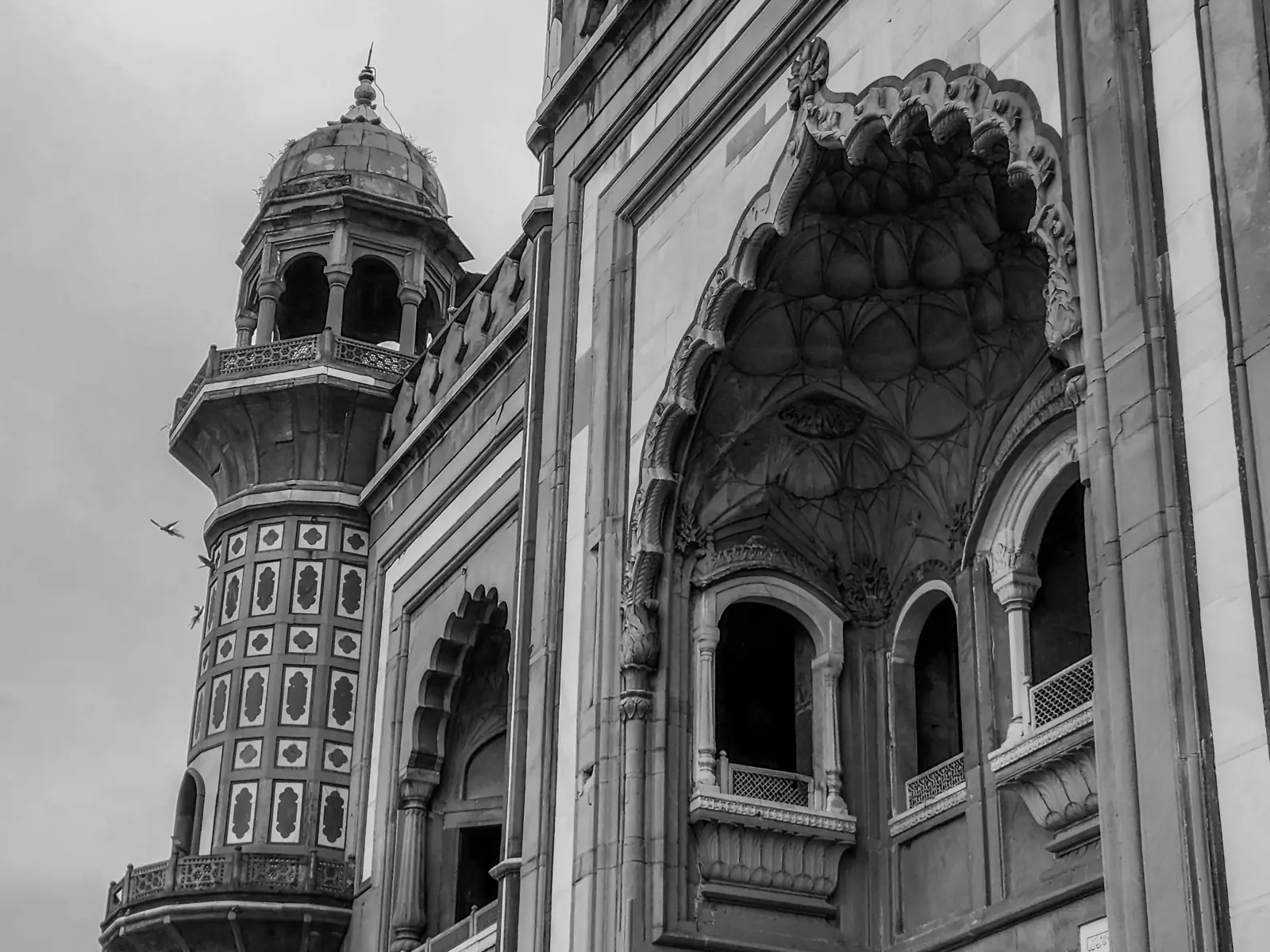
Logician, theologian and mathematician of the late thirteenth century whose Qisṭās al-afkār ended with a section on the etiquette of debate, and whose short treatise on ādāb al-baḥth became the founding text of that discipline in the madrasas.
Life
Little is known of his life. His nisba points to Samarqand; in 1287 he was in the region of Mardin, where, at the request of students, he wrote a commentary on the Muqaddima al-Burhāniyya on dialectic and dedicated it to the Artuqid ruler Qara Arslan. He was active in the time of Naṣīr al-Dīn al-Ṭūsī’s observatory at Maragha but was not a member of its team. According to the encyclopaedia article by İlhan Kutluer, a manuscript note gives his death as 22 Shawwāl 702 (9 June 1303); Kâtip Çelebi’s date of about 600/1203 is an error. Tony Street and Nadja Germann give ‘c. 1310’, Khaled El-Rouayheb 1322.
His logic handbook, Qisṭās al-afkār fī taḥqīq al-asrār, with his own commentary, closes with a long section on the etiquette of debate and on fallacies. Germann quotes his reason: the juristic dialectic of his time no longer needed the old Topics, so he offered instead ‘a canon for the art of disputation’. Later logicians rarely followed him in making debate a section of logic, but his separate treatise on the , al-Risāla al-Samarqandiyya fī ādāb al-baḥth, took the place of the Topics and the Sophistical Refutations in teaching and was read beside the Shamsiyya; treatises on ādāb al-baḥth are often copied in the same volumes as logic texts.
He also wrote on theology (al-Ṣaḥāʾif al-ilāhiyya, with his own commentary al-Maʿārif), on geometry (Ashkāl al-taʾsīs, thirty-five propositions from Euclid, which with Qāḍīzāde al-Rūmī’s commentary became an Ottoman madrasa text) and on astronomy.
Uncertain or disputed
- Year of death: 702/1303 (manuscript note, per Kutluer); 1302 (Bingöl, as cited there); about 1310 (Street and Germann); 1322 (El-Rouayheb). Kâtip Çelebi’s ca. 600/1203 is rejected.
- Teachers are not recorded in the sources consulted.
Works
- Qisṭās al-afkār fī taḥqīq al-asrār قِسْطَاسُ الأَفْكَارِ فِي تَحْقِيقِ الأَسْرَارِHandbook of logic ending with a section on the etiquette of debate and fallacies; he wrote his own commentary on it (Sharḥ al-Qisṭās).matn
- al-Risāla al-Samarqandiyya fī ādāb al-baḥth الرِّسَالَةُ السَّمَرْقَنْدِيَّةُ فِي آدَابِ البَحْثِHis best-known work; earlier writing on debate had been tied to law or theology. Many commentaries and glosses, among them that of Masʿūd al-Shirwānī (d. 905/1499) mentioned by El-Rouayheb.matn
- ʿAyn al-naẓar fī ʿilm al-jadal عَيْنُ النَّظَرِ فِي عِلْمِ الجَدَلِOn dialectic.werk
- al-Ṣaḥāʾif al-ilāhiyya الصَّحَائِفُ الإِلٰهِيَّةُTheology, with his own commentary al-Maʿārif fī sharḥ al-Ṣaḥāʾif.werk
- Ashkāl al-taʾsīs أَشْكَالُ التَّأْسِيسِThirty-five propositions of Euclidean geometry; read in Ottoman madrasas with Qāḍīzāde al-Rūmī’s commentary.werk
Reception
Street and Germann, and El-Rouayheb, describe how ādāb al-baḥth, introduced by al-Samarqandī, replaced the Topics and Sophistical Refutations in the madrasa, so that the later handbooks of logic could leave the ‘five arts’ to a short closing chapter.
Sources (3)
- Nadja Germann, “Arabic and Islamic Philosophy of Language and Logic”, Stanford Encyclopedia of Philosophy (rev. 2013)
- İlhan Kutluer, “Semerkandî, Muhammed b. Eşref”, Türkiye Maarif Vakfı Küre Ansiklopedi (content partner: İslâm Ansiklopedisi)
- Khaled El-Rouayheb, The Development of Arabic Logic (1200–1800), Schwabe 2019, sample pages