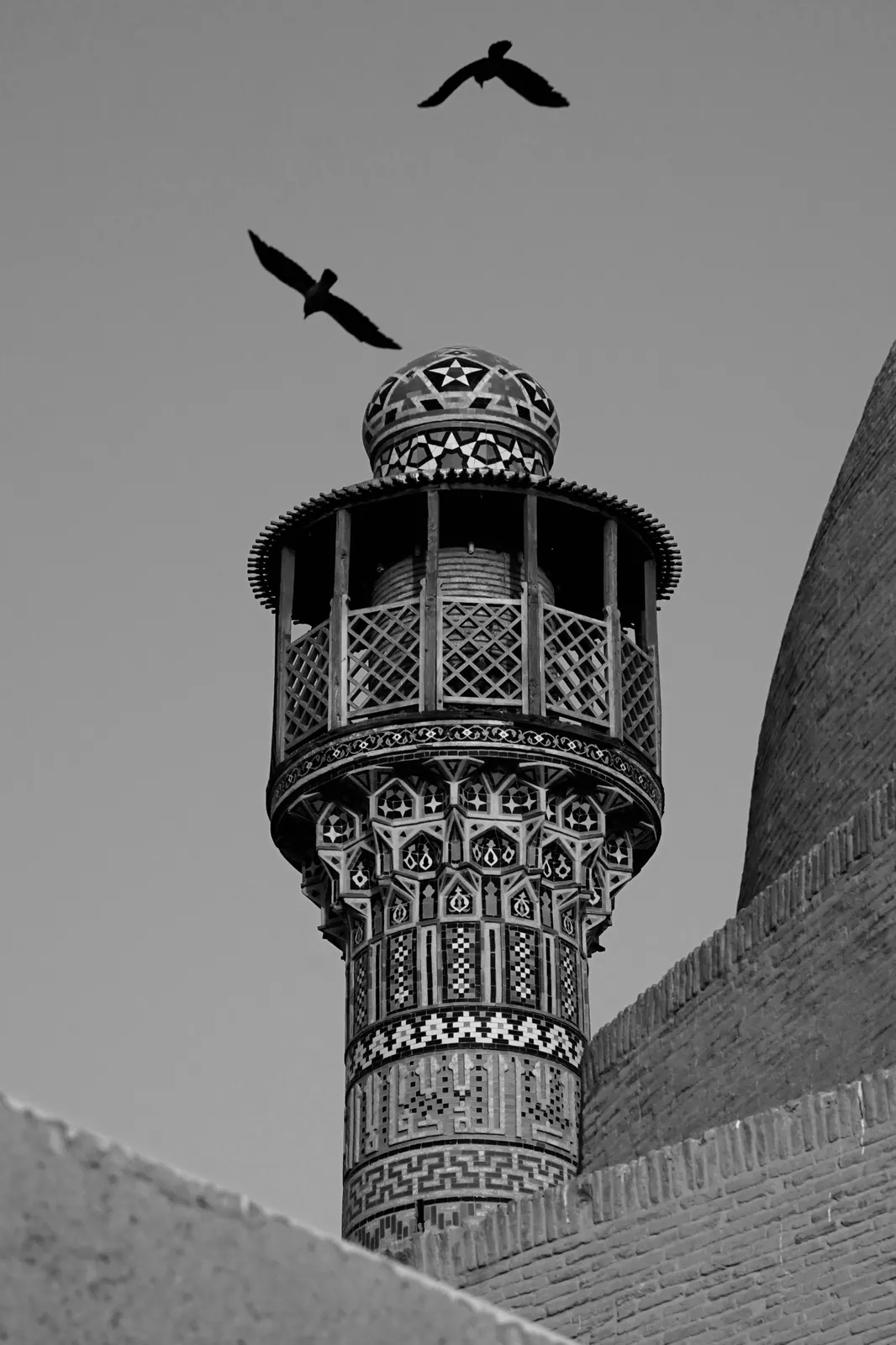
Damascene Sufi, Ḥanafī jurist and poet, author of some three hundred works, who wrote a poem on logic with his own prose commentary and urged every would-be specialist to learn logic.
Life
ʿAbd al-Ghanī al-Nābulusī was born and died in Damascus. His father Ismāʿīl, his first teacher, died when he was twelve; the TDV İslâm Ansiklopedisi names among his other teachers Najm al-Dīn al-Ghazzī and Nūr al-Dīn ʿAlī al-Shabrāmallisī. He began teaching at the Umayyad Mosque in his twenties, went to Istanbul in 1075/1664–65 in search of an office and briefly served as a judge there, and on the way joined the Qādiriyya in Hama; in 1087/1676 he received the Naqshbandī khirqa. From 1680 he spent seven years in seclusion at home, and later travelled to Lebanon, Jerusalem and Hebron, Egypt and the Hijaz (1105/1693) and Tripoli (1112/1700), writing an account of each journey. He became professor at the Selimiye madrasa of Damascus in 1703 and for a short time Ḥanafī muftī of the city (1135/1723).
The TDV counts nearly three hundred works, mostly short treatises, on Sufism (he was a famous defender of Ibn ʿArabī), law, theology, poetry and travel. In theology he criticised Fakhr al-Dīn al-Rāzī and al-Taftāzānī on the role of reason, and in law he wrote against blind imitation and on disputed questions such as music and tobacco.
For his place is in the debate on whether it may be studied. Khaled El-Rouayheb, using the Ẓāhiriyya library catalogue, describes him as a Naqshbandī Sufi who was clearly favourable to logic: he wrote a poem summarising the basic rules of logic and a prose on it, in which he says that logic is something that anyone who wants to master any science should seek. El-Rouayheb cites him, with Ṭaşköprüzāde and Saçaklızāde, as evidence that between 1500 and 1800 the mainstream in the Ottoman lands regarded logic as permissible or even commendable.
Uncertain or disputed
- The title of his logic poem and of its commentary, and whether either has been printed, could not be established from the sources consulted; the TDV article does not mention a work on logic.
- Day of birth: 4 or 5 Dhū l-Ḥijja 1050 (TDV).
Works
- Poem on logic, with his own commentaryA poem summarising the basic rules of logic, with a prose commentary by the author; known to El-Rouayheb from the catalogue of the Ẓāhiriyya library in Damascus (ʿAbd al-Ḥamīd Ḥasan, Fihris makhṭūṭāt Dār al-Kutub al-Ẓāhiriyya: al-falsafa wa-l-manṭiq wa-ādāb al-baḥth, 1970, p. 173). The title is not given in the sources consulted.verse
Reception
His remark that should be sought by anyone who wants to master a science is quoted by El-Rouayheb as an example of the favourable mainstream view of logic among Sunni scholars before the nineteenth century.
Sources (2)
- “Nablusî, Abdülganî b. İsmâil”, TDV İslâm Ansiklopedisi 32 (2006), 268–270
- Khaled El-Rouayheb, “Sünnî Müslüman Âlimlerin Mantık İlmi Karşısındaki Tavırları (1500–1800)”, tr. Sacide Ataş, Mantık Araştırmaları Dergisi 1/1 (2019), 118–139 (Turkish translation of “Sunni Muslim Scholars on the Status of Logic, 1500–1800”)